
Strategic health policy and planning in a complex world. Leveraging systems thinking and modelling to optimise investments and impact
During this course, participants will learn how to model and analyze various alternative strategies using an interdisciplinary approach that brings together systems thinking, decision analysis (including economic evaluation) and complex public health challenges.


Course facilitated by:



About the course
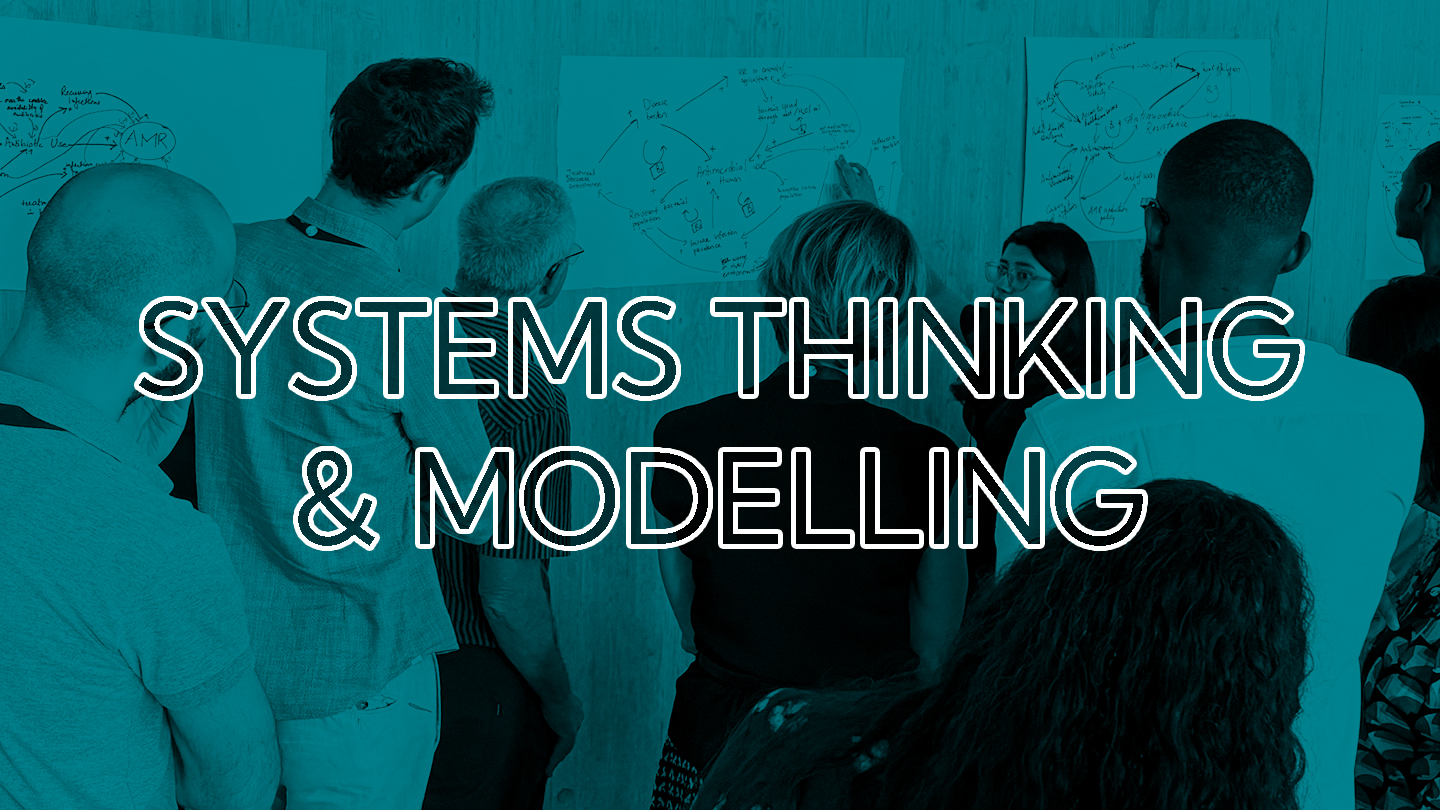
The course is a “hands on” entry level course to expose participants to the principles of Systems Thinking & System Dynamics Modelling. Efficient public health policy prioritization requires that we understand how systems function and how their various parts are interrelated. Changing one part may impact another and then another or may even create new challenges. Using systems thinking and system dynamics modelling facilitates an understanding and appreciation of how various policies, interventions, solutions, and changes in health systems can be prioritized in accordance with needs and resources.
Using an interdisciplinary approach that brings together systems thinking, decision analysis (including economic evaluation) and complex public health challenges, participants will learn how to model and analyze various alternative strategies.
This 3-day course will expose participants to:
- The ‘what and why’ of systems modelling and simulation;
- Real-world applications that informed policy and planning through the participatory development of decision support tools;
- Exposure to system dynamics modelling and its practical applications plus an overview of other systems modelling methods available in the toolbox, particularly Discrete Event Simulation;
- A hands-on approach to building simple prototype models with interactive user interfaces.
Day1 (10.30 – 16.30 CEST): Systems modelling to address public health challenges: The What and Why.
This short course will be orientated towards researchers, public health practitioners, and decision makers who may be interested in the application of systems modelling to support policy and planning decisions. Lectures will include insights from real-world population health applications of systems modelling and provide a step-by-step guide to building models. A series of hands-on activities that socialize systems modelling for the purpose of supporting policy and planning. Multiple models will be demonstrated, with participants enabled to interact with them to understand a range of systems insights relevant to public health applications including infectious disease control, chronic disease prevention, and mental health systems strengthening.
Day2 (9.00 – 15.00 CEST): Integrating economic analyses into system dynamics models to support policy and planning.
A series of lectures will provide an introduction to ‘dynamic health economic evaluation ’including a step-by-step guide to incorporating costs into system dynamics models and interpreting the results of economic analysis. Participants will have the opportunity to run simulations of systems models to undertake cost-utility, cost-effectiveness, and cost-benefit analyses. This will include scenario testing to explore uncertainty and the impact of alternative assumptions and derive insights relevant to strategic decision making (e.g.implications of short term vs. long term time horizons).
Day3 (9.00 – 15.00 CEST): Policy maker for a day – further exercising of systems models to support policy and planning.
An introduction to discrete event simulation (DES) and agent-based modelling - a series of lectures that provide a step-by-step guide to developing DES model to support service planning (vaccination logistics, healthcare service delivery). Demonstration of a cardiovascular disease agent-based model will also introduce participants to modelling at different scales to help understand the interaction between biological to behavioural processes.
Across the three days attendees may choose to engage with the step-by-step model building process (with in person support) to build basic technical competency in the methods or may simply wish to listen and understand it conceptually so as to become more informed users of systems models. All participants must attend onsite.
Learning objectives
By the end of the course participants will be able to:
- Understand core systems thinking and system dynamics concepts for public health policy and planning.
- Interpret system behaviour and policy trade-offs using model simulations and visual outputs.
- Apply introductory economic evaluation concepts (cost-effectiveness, cost-benefit, time horizons) within systems models.
- Build or modify a simple system dynamics model and interactive interface with guided support.
- Recognise appropriate uses of system dynamics, discrete event simulation, and agent-based modelling for policy and service planning.
Prerequisites
- Basic numeracy & computer skills;
- Participants will be provided with a free Workshop copy of the “Stella” software. It is preferrable, but not essential, that all participants familiarize themselves with the use of this software prior to the start of the course (https://www.iseesystems.com/resources/tutorials/).
Pedagogical methods
- Lectures;
- Interactive Discussions;
- Small group work;
- Hands on Computer modelling.
Pedagogical methods
Assessment procedure
To get the Certificate of completion and the 1 ECTS participants must:
- Attend at least 80%of the course;
- Attend the plenary offered during the first day of the course;
- Actively contribute to classes and activities.
Format description
The facilitators plan to be present in Lugano, and the course will be held entirely on-site. If face-to-face meeting was problematic for unforeseen reasons, the course could be held online or using a hybrid format. The course will take place at Università della Svizzera italiana (USI).
For course pricing information, see here. Discounts are available for participants from UMICs, LMICs, PhD and Master Students, and Students and Employees from the LSS Partner Universities (SSPH+, USI, SUPSI, and SWISS TPH).